.jpeg)
Coral Gables Residence: Duality in Design
Although we’ve designed many luxury homes, one of our most iconic and bold designs is the Coral Gables Residence, a project that was a labor of love for three years and captures our vision of what Miami’s design language should be. Already Robin Hill’s beautiful photography of this property has garnered widespread media attention in various architecture, design, and lifestyle magazines and blogs. We are deeply grateful for all the international interest our design has generated and for being recognized for our efforts.
One observation continuously arises in discussions of Coral Gables Residence is that the design for the house is dual-sided. To shed light onto our design process and tease out the nuances of this project, we want to walk you through and answer some popular questions.
How did we come up with the design for the building?
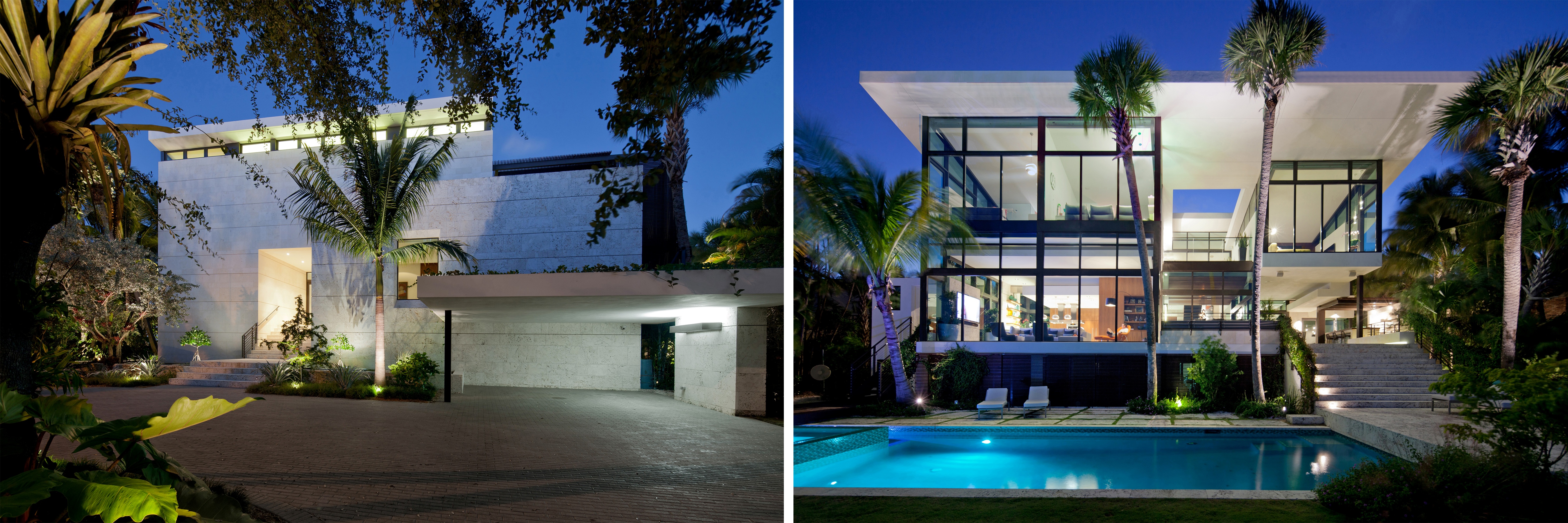
The neighborhood of Coral Gables has a quite distinct architectural feel that is more traditional in nature, yet the owners were inclined toward a more modernist design, and so was born the idea that the house should have two sides, two faces. The front of the house is quieter and blends in more closely with the neighborhood’s streetscape, while the reverse takes on a bolder, modern appearance opening to views of the water afforded by the primarily glass facade. The challenge in undertaking such a twofold concept was to still make the house visually cohesive; in determining the palette we sought a balance between the client’s wishes and the Coral Gables’ established identity.
We think of the house façade as just that, a mask towards the outside that disguises the house’s bolder reality, making the architecture more palatable to neighbors. Given the house’s situation in Coral Gables, we aptly incorporated the coral rock material underneath the foundation and for which the city is named for.
The interior spaces were also laid out with this duality, thus the rooms facing the street are designed for discretion, creating privacy for the owner’s family while adhering to the city’s strict guidelines on materials and style.
The rear half of the house with its glass walls instead creates transparency, with all the spaces oriented towards views of the water and lush garden. On the second floor, we even opened the house to the sky by creating a terrace. We love crafting spaces that blur indoor and outdoor spaces, allowing us to bring light into the house and connect with nature.
What materials were used?
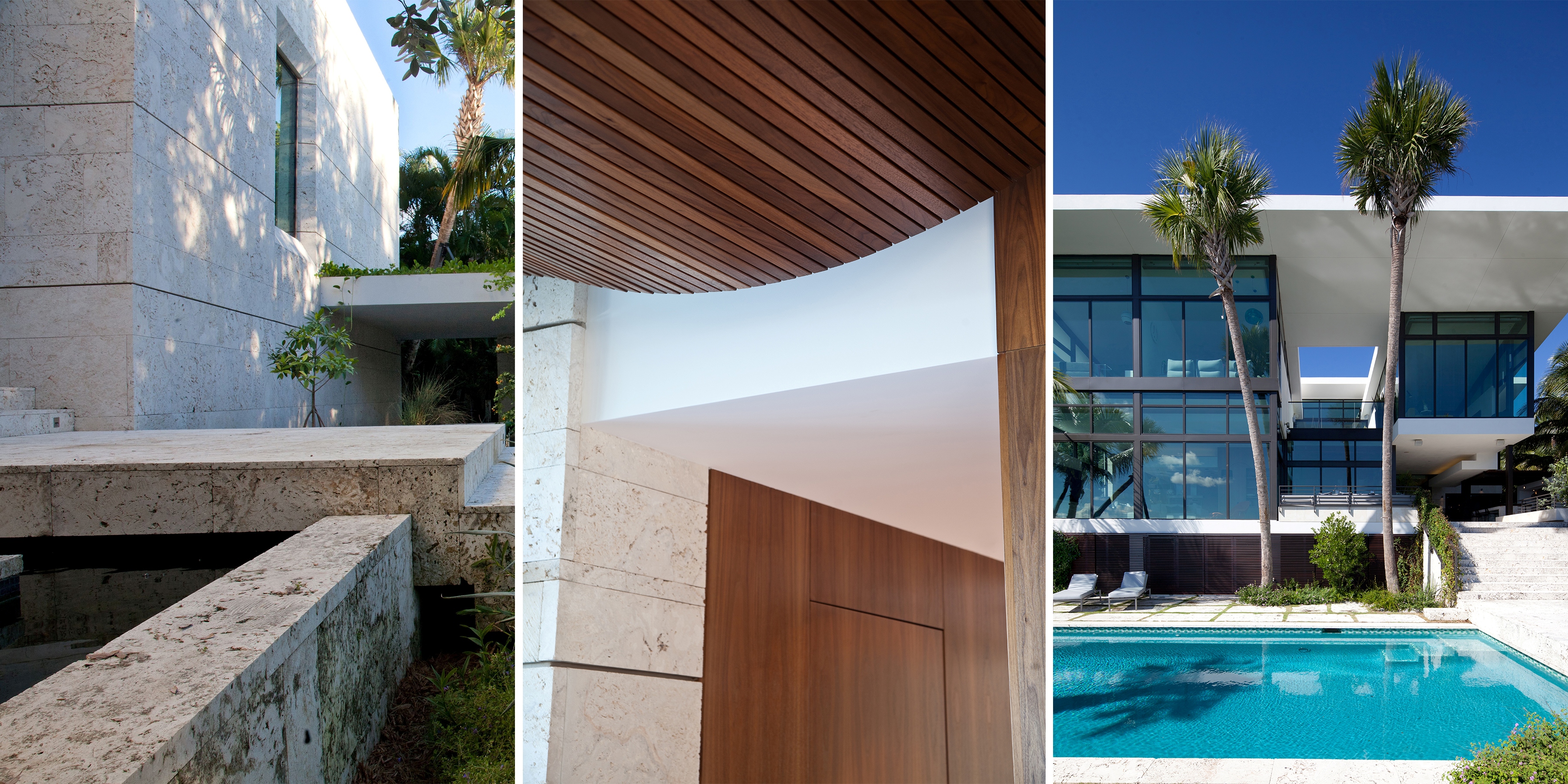
As previously mentioned, one of the primary materials for the house was coral rock, which is also one of our favorite local materials to work with and allows us to be more sustainable. So much of this fossilized stone can easily be found underneath South Florida’s soil and we love tying our architecture and interiors with the site’s materiality. We also used limestone with large, fossilized patterns as a more “refined” version of the coral rock in spaces where we wanted a smoother surface texture such as the Master Bath.
Walnut was the chosen wood for the home’s interior as our clients loved the warmth of the color, which contrasts the home’s stone and glass bodies.
We love the juxtaposition of stone and wood—more traditional materials—with the modern sleekness of the glazing and concrete roof. In almost all our project we seek a balance: smooth and rough; dark and light; warm and cool. As humans we thrive better in environments that provide us with contrasting material textures, depths, and warmth. We are not meant to live in cold, white boxes. One philosophy we embrace is wabi-sabi, which celebrates the beauty of natural materials with their varied textures and imperfections.
What were the clients' tastes?
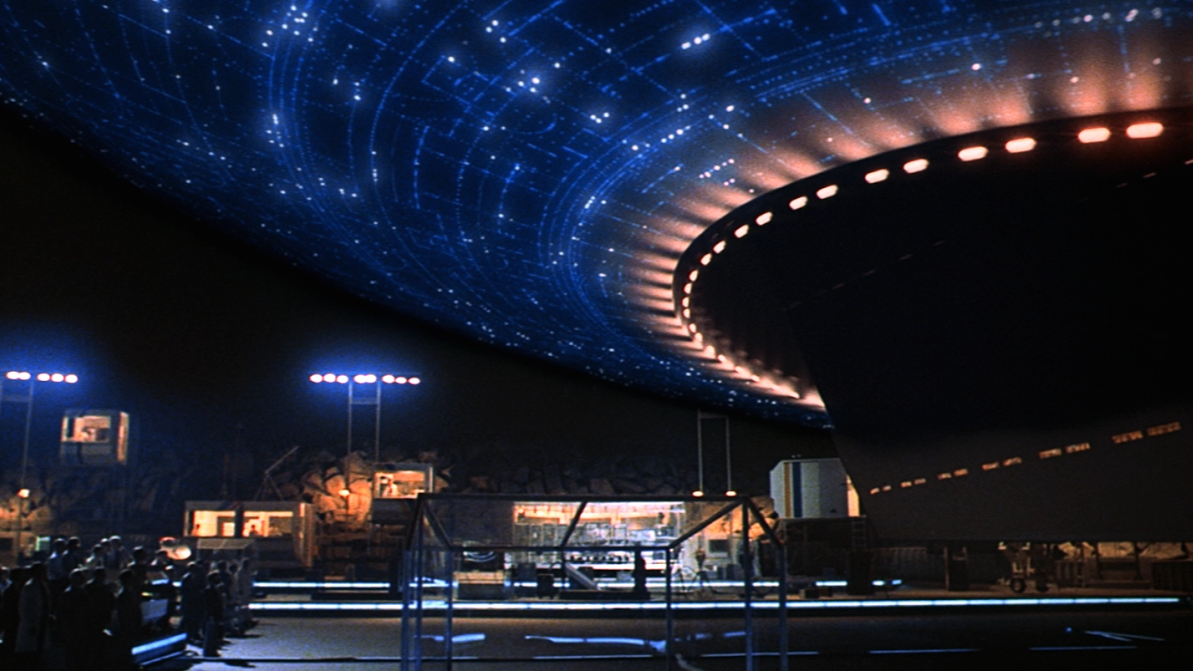
Since our client is a pioneer in the tech industry, he particularly enjoys futuristic and modern designs. Like Carlos and I, he also loves science fiction. This still from Close Encounters of the Third Kind provided inspiration for the clerestory’s lighting at night. Just take a peek at the sculptural roof of the front of the house; we even added color changing LEDs to allow the owner to have fun with the space.
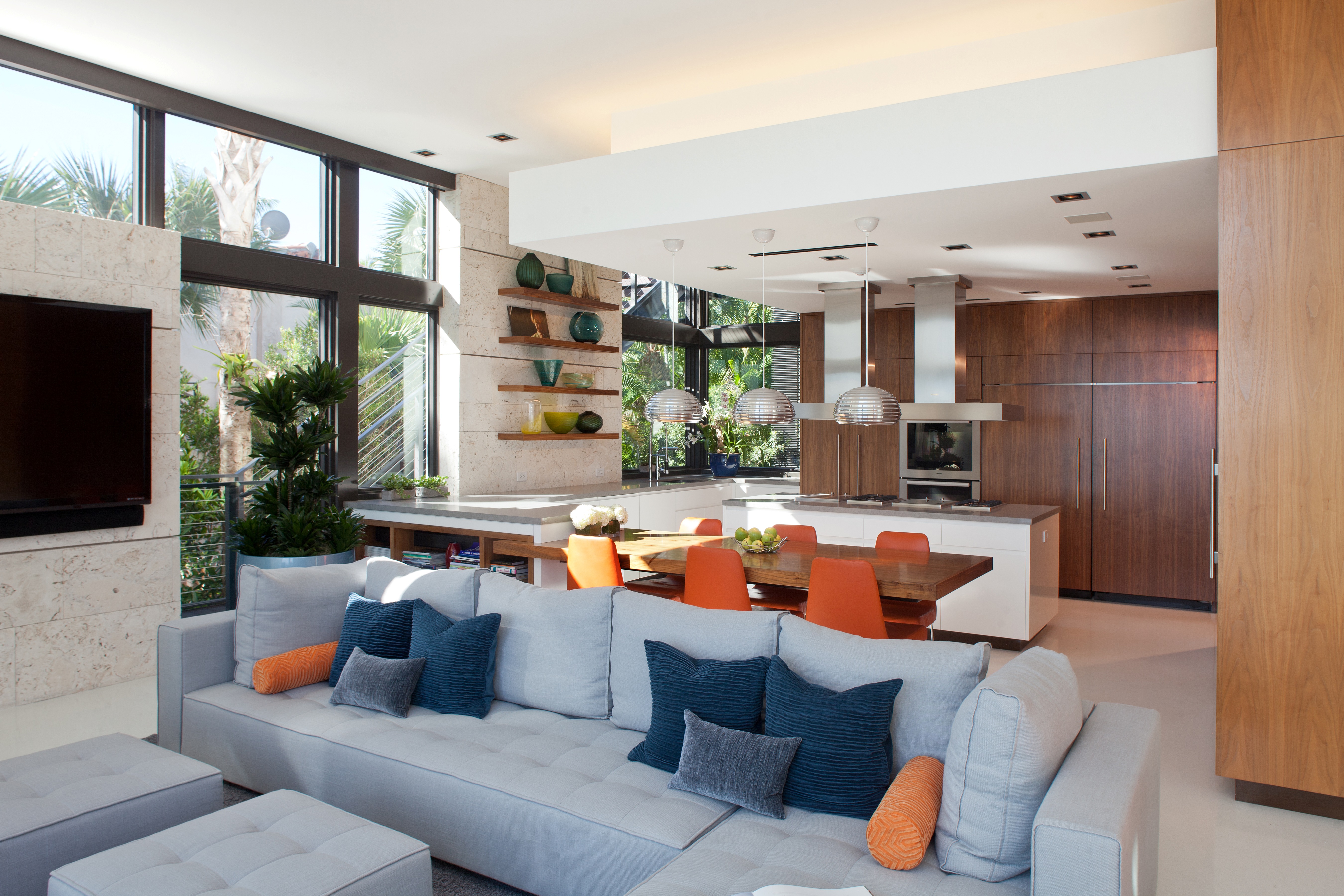
As for the client’s wife, her upbringing in a tropical environment gave her a slightly different stylistic sensibility. She was looking for modern interiors that still had character and warmth. Her priority was creating an inviting home that her family and guests can enjoy.
Including these personal touches into our designs, meant this house would truly feel like home for our clients. The latent tension between the hyper-futuristic and the tropical created another duality to the design of the house. Exploring that tension and finding a balance between our clients’ desires made our work on Coral Gables Residence fulfilling.
.webp)
.webp)