On Terrazzo: Fragments, Memory, and a Little Havana Experiment
Terrazzo is one of our favorite materials and one that we return to time and again.
We grew up seeing terrazzo everywhere in Miami and Miami Beach. Small moment and bigger gestures- we consider it to be a truly iconic Miami material - and once you start paying attention to it, you see it all over. It is in the old storefront thresholds, apartment entries, little lobbies, even the corner cigar shop next to our studio in Little Havana. Each modest storefront holds its own identity embedded within the material. They all have their own pattern, their own texture, their own way of welcoming you in.
The first time we went back to Havana as adults we kept seeing terrazzo everywhere. And these examples are so beautiful, even in their current state of disrepair. The patterns in the Riviera, the comlex deco geometries. In a 1931 lecture at the University of Havana, Cuban designer Clara Porset (and one of my great design icons) noted that when living in the tropics "it is the material of the floor itself which interests us. Marble, terrazzo, mosaics, and ceramics, they are all cold materials...With any of them, we can combine different colours to create patterns that make the floor much more interesting than if it were monotonous."
It's no wonder then that terrazzo is one of the materials that has quietly become embedded in the visual language of our city, and a meterial which we in our work will keep returning to.
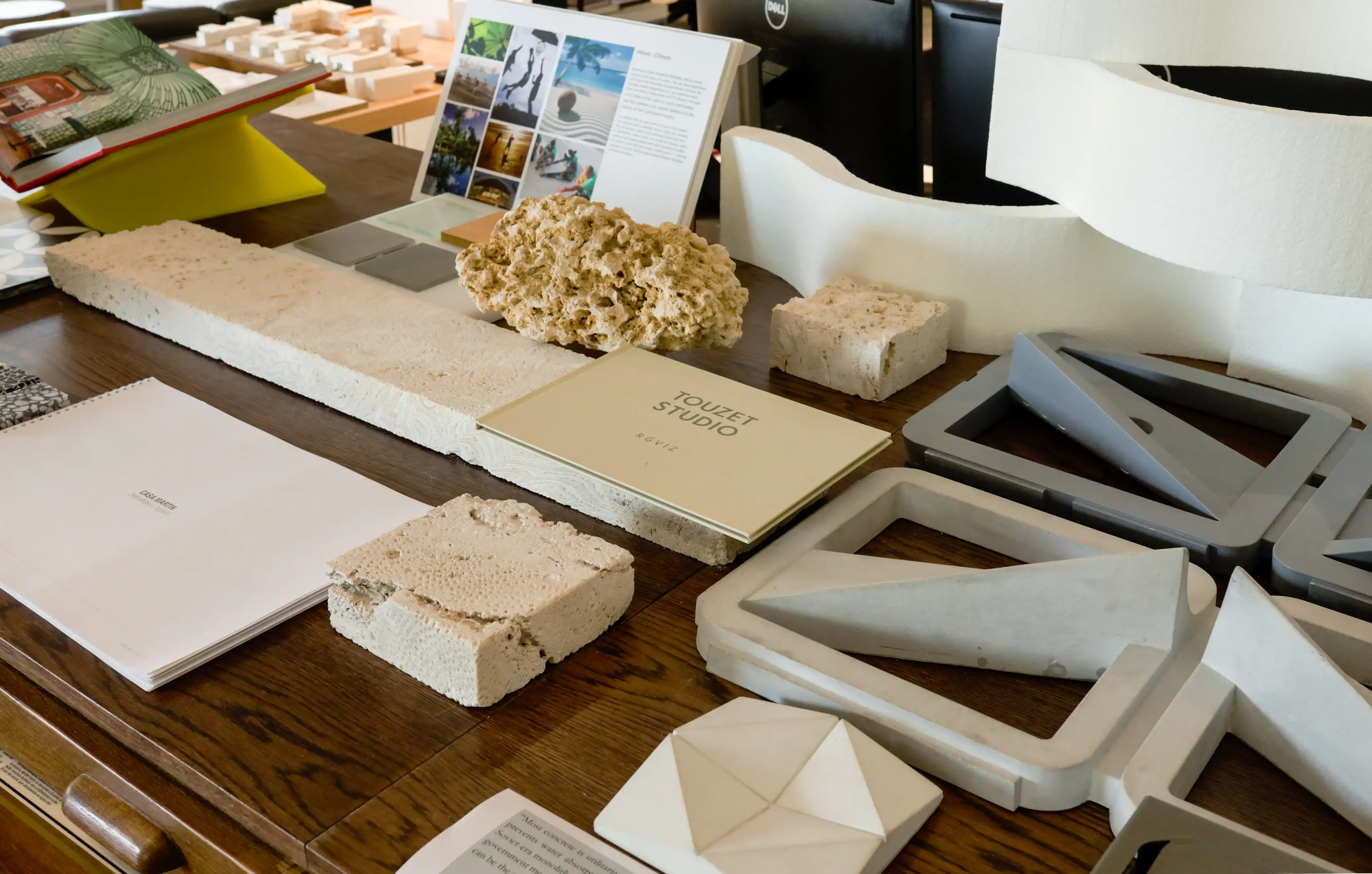
Touzet Studio Terrazzo
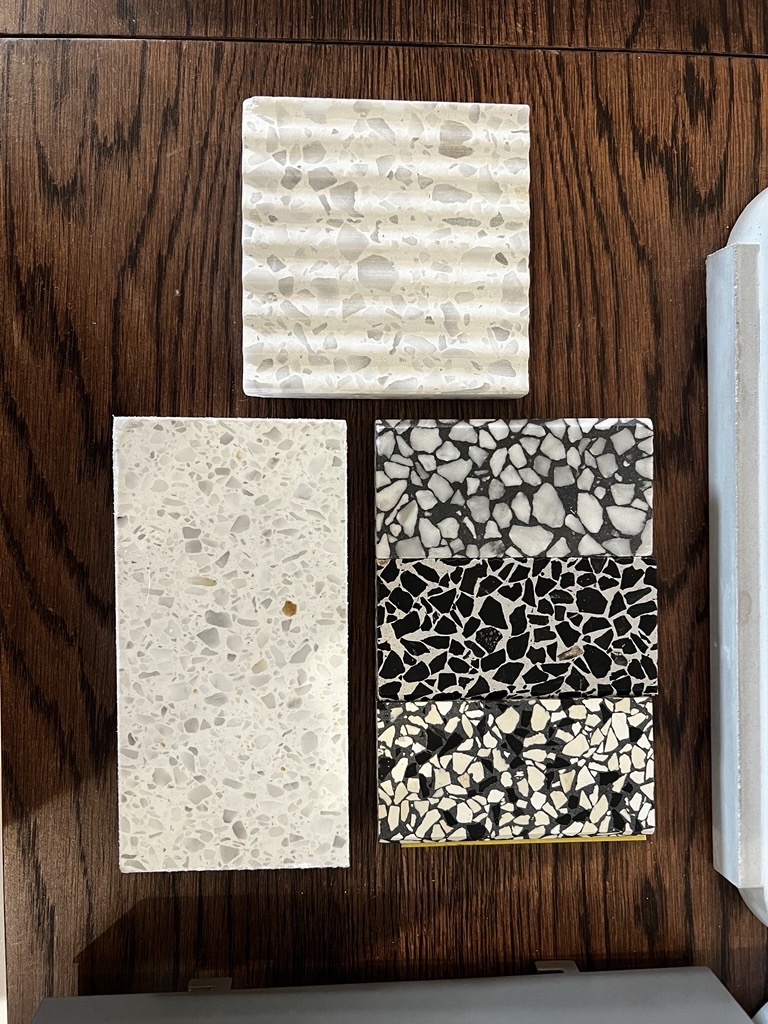
In our own design work, we have turned to terrazzo time and again when clients want to connect to our palette. In Lincoln Road, where we’ve done a lot of work, we have always specified terrazzo for the floors. At the Apple Flagship store, which was controversial at the time, we insisted on using a Miami Beach palette and incorporated micro terrazzo. We did the same at Nike. At our own 1955 home in South Miami, we restored the original terrazzo piece by piece, because it was too beautiful to lose. There is something timeless about this material: durable, imperfect, reflective, handcrafted. Terrazzo ages beautifully and somehow always feels both nostalgic and modern.
Right now, we are developing NoLi, our latest project on Lincoln Road with Comras Company, and terrazzo is once again at the heart of how we are thinking about arrivals, creating visual micro moments, and a larger identity for the street. More on that in a future post.
Material Experimentation
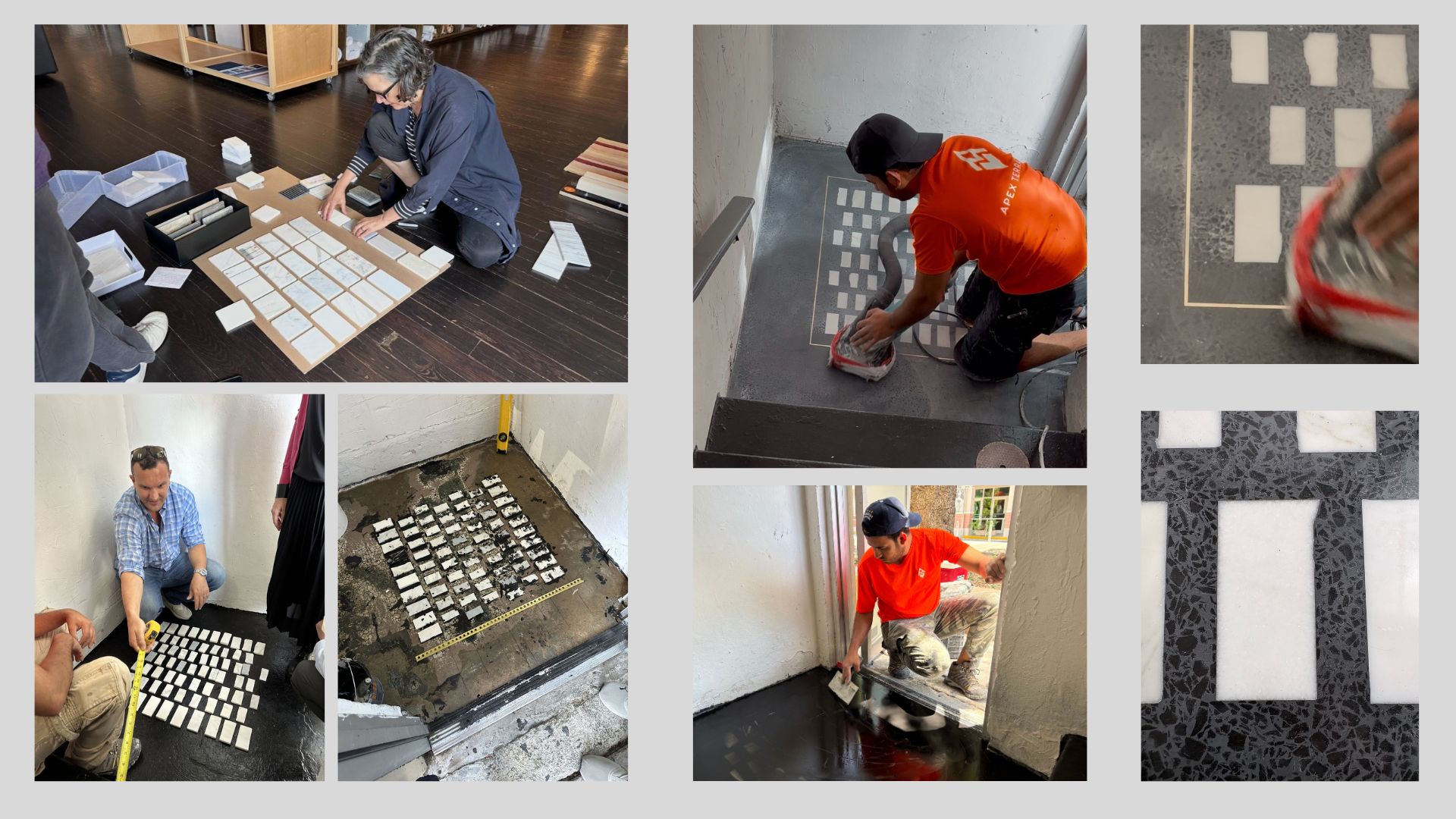
At the studio, we started experimenting with leftover marble samples from our own materials library, composing them by hand in a Palladiana pattern inside a matte black, recycled glass, terrazzo field. Part of what we love about terrazzo is that it carries both traces of memory and is born from improvisation. No two compositions are ever exactly alike.

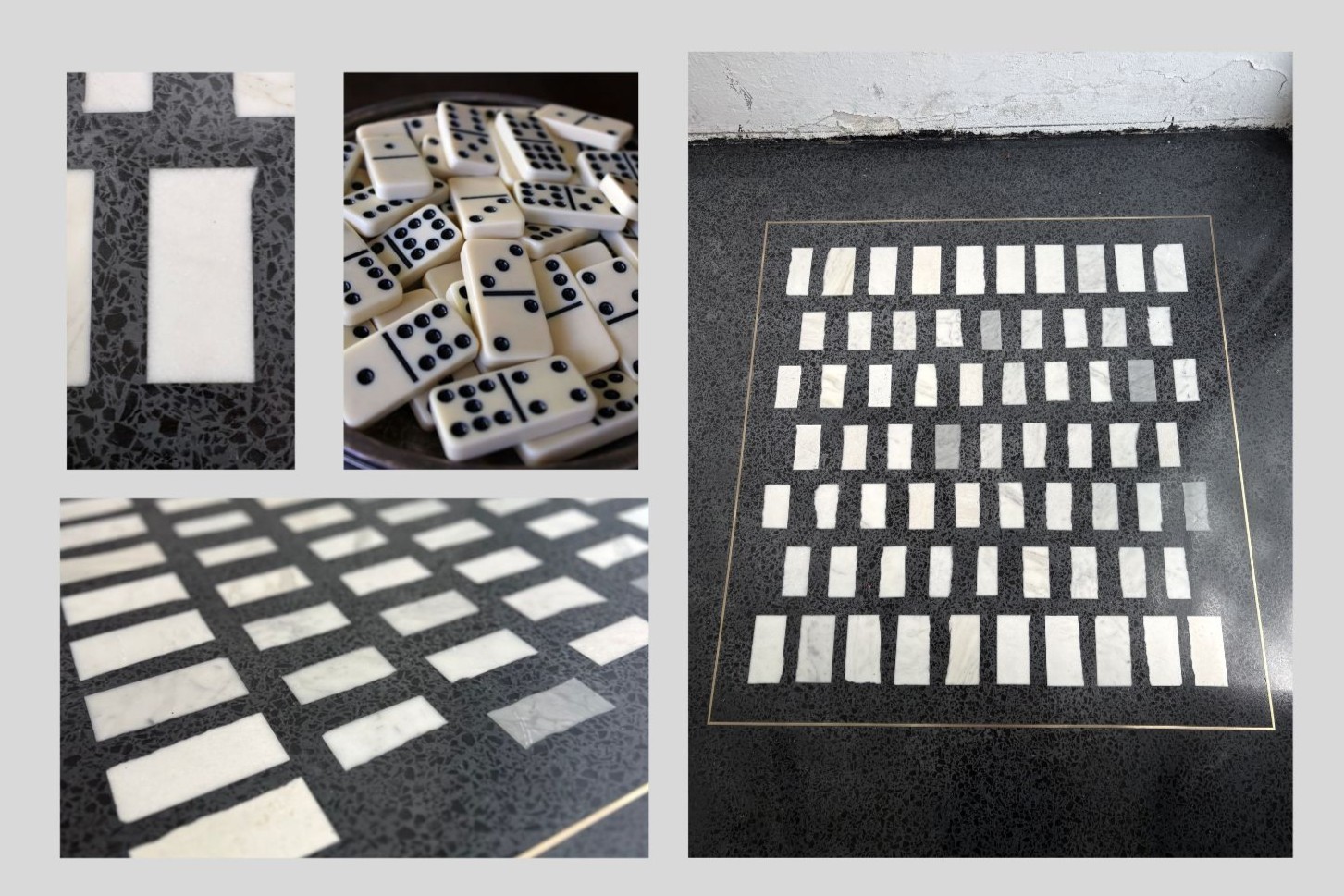
Somewhere during the process, the floating white marble pieces against the dark background started reminding us of the domino tables across the street at Domino Park.
Our Palladiana studies are also loosely inspired by the Italian master Carlo Scarpa and his Olivetti showroom in Venice, where craft and material turn even the smallest retail space into something unforgettable.
One of the things we have tried not to do with our Little Havana studio is overdesign it. We want the space to evolve slowly, using materials we already have on site and minimizing waste wherever possible. There is something quietly satisfying about creating beauty out of fragments and remnants.
We are also exploring terrazzo in other ways right now: a floating stair in Miami Beach, terrazzo benches, and future experiments with fiber reinforced concrete for parks and public space.
---
Rosa Lowinger, in her novel Dwell Time, writes that “most of the places I’ve called home—Havana, Miami, Los Angeles—are known for their terrazzo pavements.” She describes the floor of her father’s building in Havana as “a single pour of black terrazzo speckled with white marble that looks like the night sky.” We could not have said it better. We finished the studio’s terrazzo floor just in time to welcome Rosa for Entre Las Palmas, our studio tertulias.
.webp)
.webp)
.webp)